Easy Quilt Blocks for Beginners: 10 Simple Blocks to Start With
Every quilt is built from quilt blocks, and the best way to learn quilting is to start with a few simple ones. The easy quilt blocks below use only squares, rectangles and triangles, so you can practice accurate cutting and a steady 1/4″ seam before moving on to harder patterns. For each block you will find what it is made of, why it suits beginners and how quilters often use it.
What makes a quilt block easy?
The simplest quilt blocks for beginners share a few things:
- Few pieces, usually between 4 and 20.
- Straight seams, with no curves or set-in seams.
- Simple shapes that can be cut with a ruler and rotary cutter.
- Forgiving points, so small errors do not show much.
Start with blocks made only of squares and rectangles, then add half square triangles. Once you can make a half square triangle accurately, a huge range of quilt block patterns opens up.
10 easy quilt blocks for beginners
1. Four patch
Four squares sewn in two rows of two, usually alternating light and dark. It is the most basic quilt block and a perfect first lesson in matching seams.
2. Nine patch
Nine squares in three rows of three. Alternate two fabrics for a checkerboard, or use a scrappy mix. Nine patch blocks set side by side, or alternated with plain squares, make a classic quilt.
3. Rail fence
Three or four strips sewn together and cut into squares. Turning every other block creates a zigzag “fence” across the quilt. It is a great block for practicing strip piecing.
4. Half square triangle
A square made of two triangles. On its own it is one of the most useful basic quilt blocks, and it is also the building unit of many others. Make two at a time by sewing 1/4″ on each side of a diagonal line across two stacked squares, then cutting on the line.
5. Pinwheel
Four half square triangles turned so they spin around the center. It is the natural next step after half square triangles and teaches you to match points in the middle.
6. Hourglass
Four triangles meeting in the center, made from two half square triangles cut and resewn. It looks crisp in two high-contrast fabrics.
7. Log cabin
Strips, or “logs,” added in rounds around a center square. Because it uses only strips, it is very beginner friendly, and the same blocks can be arranged in many ways. See our guide to log cabin quilt layouts for ideas.
8. Flying geese
A rectangle with a large triangle in the middle and two smaller triangles at the sides. The “no-waste” or “stitch and flip” method makes it simple to sew, and rows of geese make lively borders.
9. Churn dash
A nine patch layout with half square triangles in the corners and strip units on the sides. It combines the skills from the first blocks into one well-loved traditional block.
10. Ohio star
A nine patch with hourglass units in the middle of each side, forming an eight-pointed star. It is a good “graduation” block once the others feel comfortable.
Easy quilt blocks compared
| Block | Made from | Skill it teaches | Difficulty |
|---|---|---|---|
| Four patch | 4 squares | Matching seams | Very easy |
| Nine patch | 9 squares | Accurate 1/4″ seams | Very easy |
| Rail fence | Strips | Strip piecing | Very easy |
| Log cabin | Strips around a square | Building in rounds | Easy |
| Half square triangle | 2 triangles | Sewing on the bias, trimming | Easy |
| Pinwheel | 4 half square triangles | Matching center points | Easy |
| Hourglass | 4 triangles | Cutting and resewing units | Easy |
| Flying geese | 1 rectangle, 2 squares | Stitch and flip | Easy |
| Churn dash | Squares, strips, triangles | Combining units | Easy to moderate |
| Ohio star | Squares and hourglass units | Matching many points | Moderate |
Tips for sewing accurate quilt blocks
- Use a consistent 1/4″ seam. A quarter-inch presser foot helps more than any other tool. Sew a test block and measure it before cutting a whole quilt.
- Press, don’t iron. Lift and lower the iron instead of sliding it, so the fabric does not stretch.
- Press seams to the dark side, or open, and nest opposing seams so intersections line up.
- Square up each block to the same size before joining blocks together.
- Chain piece. Feed pairs through the machine one after another to save time and thread.
- Make a test block first. It shows any cutting or seam problems before you cut all your fabric.
From blocks to a quilt: arrange them on a design wall
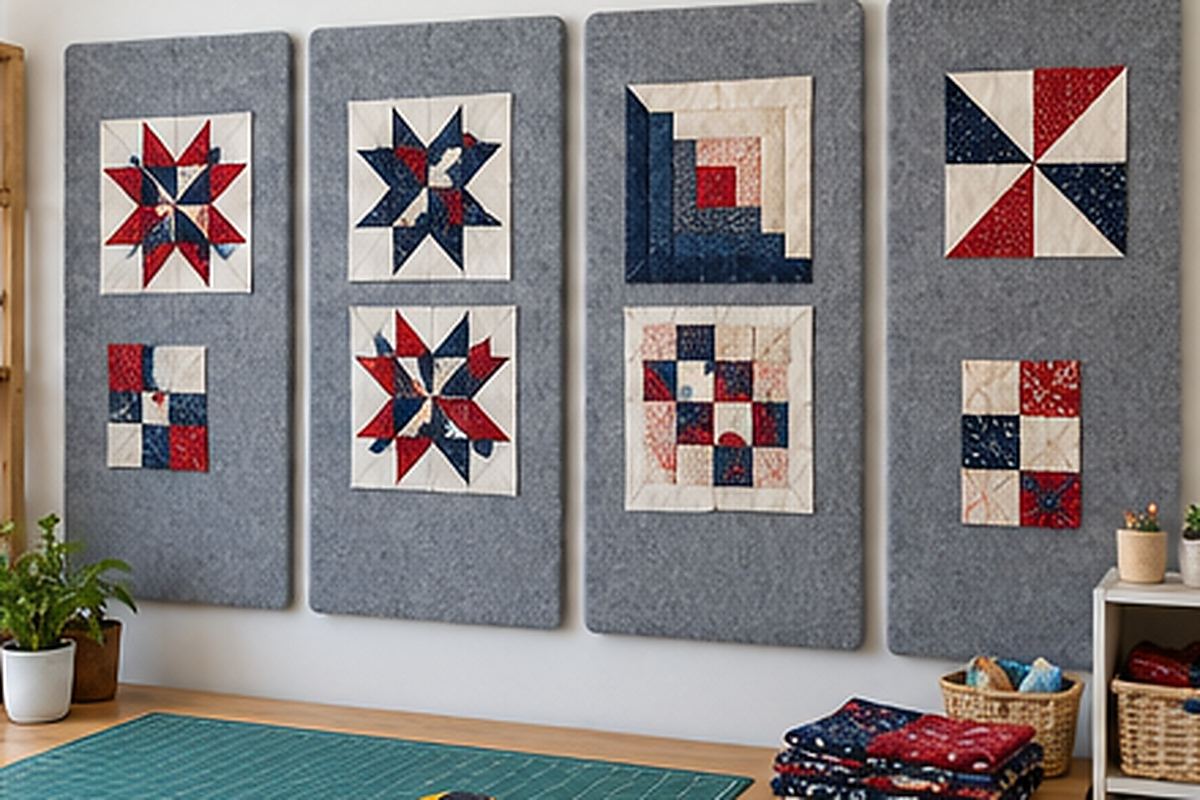
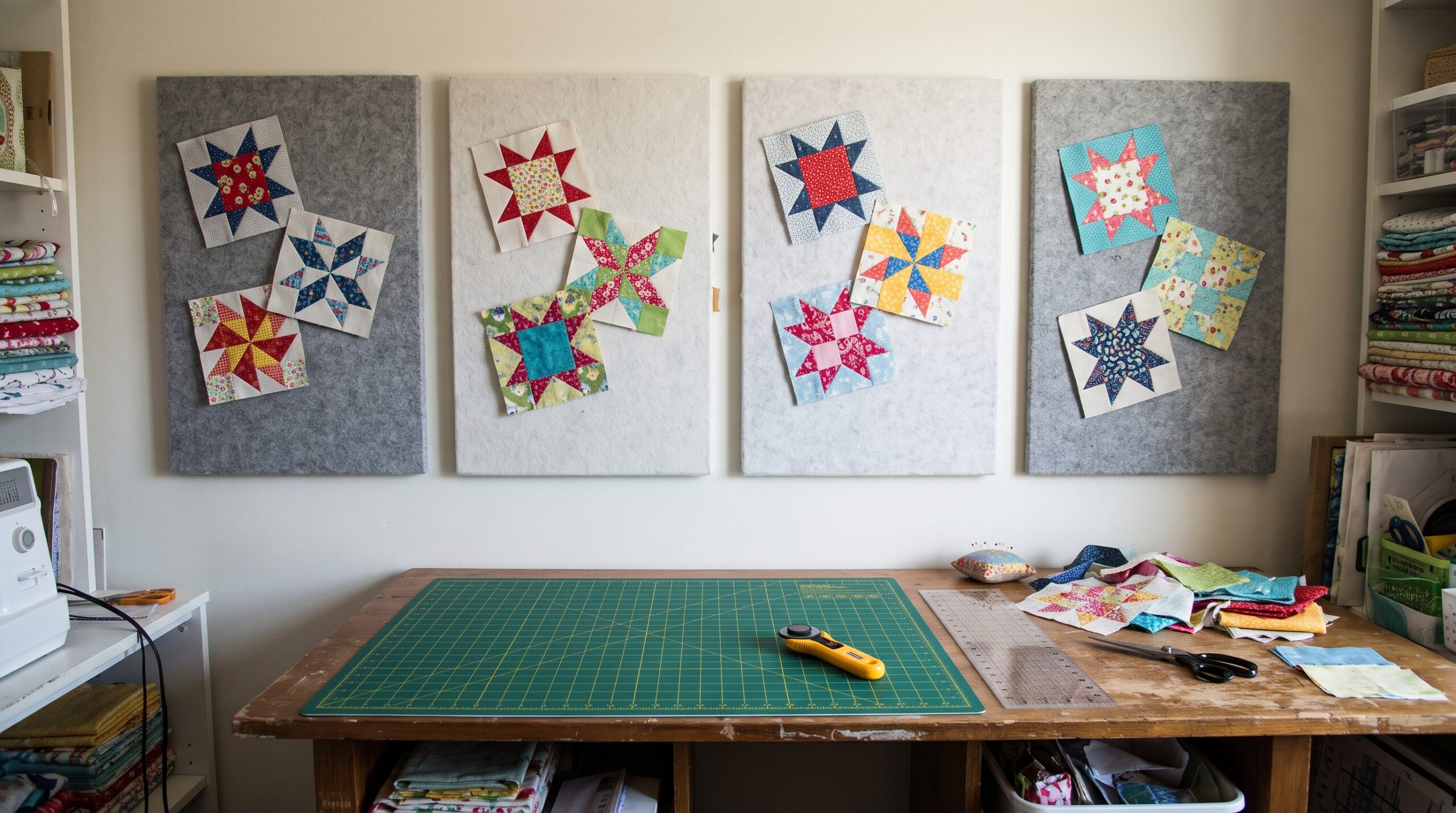
Once your blocks are made, the next step is choosing how to arrange them. Even simple blocks change completely depending on placement, rotation and color balance. A quilt design wall lets you lay every block out at once, step back, and move them around until the quilt looks right.
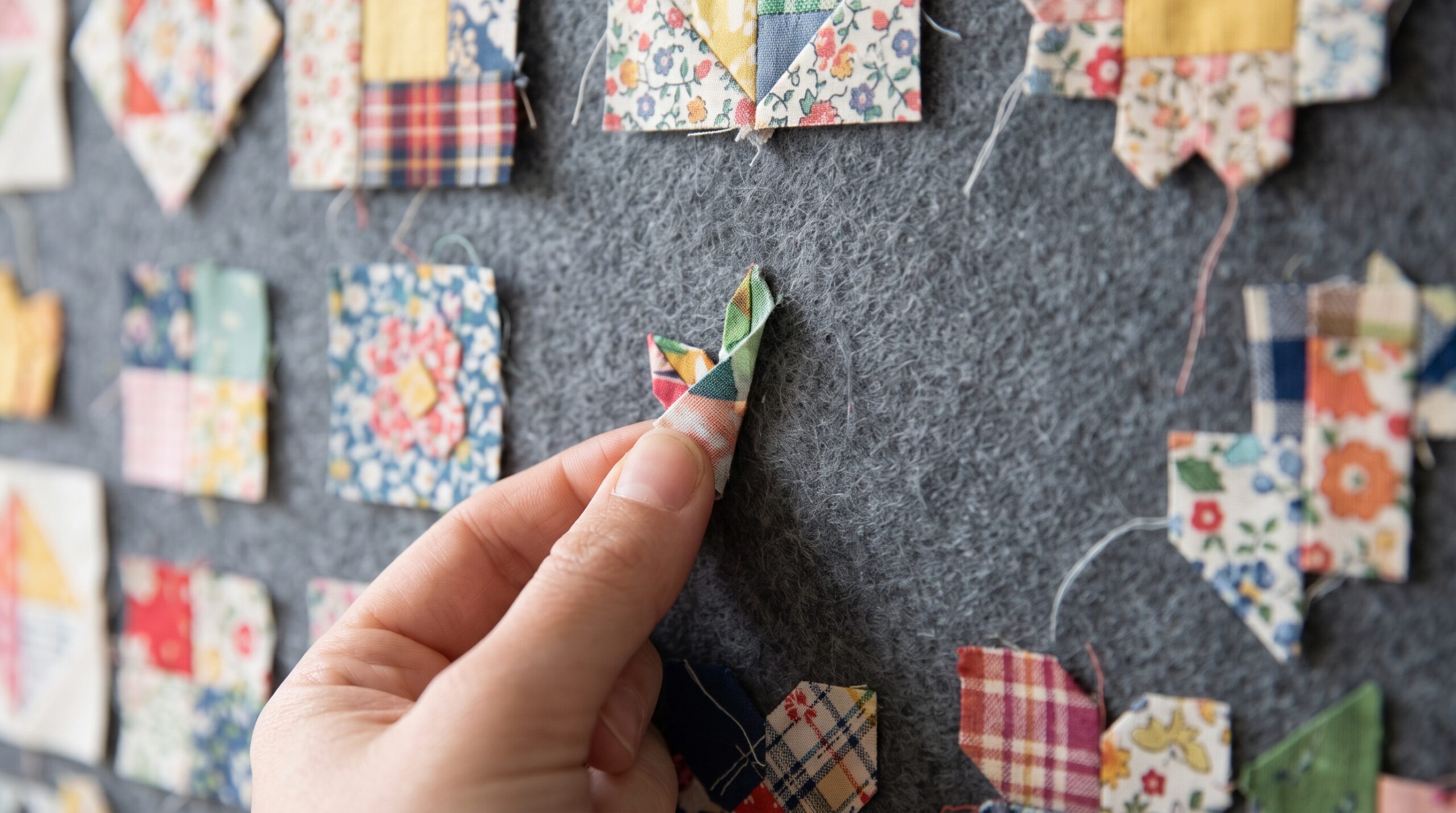
- Put all your blocks on the wall in rows. Flannel holds cotton blocks without pins.
- Balance color and value, so no two very similar blocks sit side by side.
- Try rotating blocks such as rail fence, half square triangles and log cabin to see new patterns.
- Test sashing and borders by laying strips of fabric between and around the blocks.
- Photograph the layout before taking blocks down row by row.
The large quilt design wall fits a full bed-size layout, and quilt design wall tiles are ideal for checking a few test blocks in a small sewing room. To finish your quilt, read our guides to quilt sashing and quilt border ideas, and see the quilt sizes chart to work out how many blocks you need.
Frequently asked questions
What is the easiest quilt block for beginners?
The four patch and nine patch are the easiest quilt blocks. They use only squares, so you can focus on cutting accurately and sewing a consistent 1/4-inch seam.
What size should quilt blocks be?
Common finished sizes are 6, 8, 10 and 12 inches. Larger blocks, such as 12 inches, mean fewer blocks and fewer seams, which makes a first quilt quicker to finish.
How many quilt blocks do I need for a quilt?
Divide the quilt size by the block size. For example, a 48 x 60 inch lap quilt needs 20 blocks of 12 inches, set 4 across and 5 down, before adding sashing or borders.
Why are my quilt blocks different sizes?
Usually the seam allowance varies slightly, or fabric stretches during pressing. Check your 1/4-inch seam with a test block, press without sliding the iron, and square up each block to the same size.
Can I mix different quilt blocks in one quilt?
Yes. A quilt made from different blocks is called a sampler quilt. Keep the blocks the same size and use sashing or a consistent background fabric to tie them together.
Tags