Quilt Sizes Chart: Standard Quilt Sizes from Baby to King
Before you cut a single piece of fabric, you need to know how big your quilt should be. Quilt sizes are not as standardized as sheet sizes, so this quilt size chart gives typical finished dimensions in inches for every common size, from baby and lap quilts to queen and king, along with the mattress sizes behind them and how to work out the right size for your own bed.
Quilt size chart
These are typical finished quilt sizes. Patterns and quilters vary, so treat them as a reliable starting point rather than fixed rules.
| Quilt size | Typical size (inches) | Common range (inches) | Mattress size (inches) |
|---|---|---|---|
| Baby | 36 x 52 | 30 x 30 to 40 x 54 | Crib, 28 x 52 |
| Toddler | 45 x 60 | 42 x 58 to 46 x 60 | Toddler bed, 28 x 52 |
| Lap | 50 x 65 | 45 x 60 to 54 x 70 | None |
| Throw | 60 x 70 | 54 x 72 to 60 x 80 | None |
| Twin | 70 x 90 | 66 x 88 to 72 x 96 | 38 x 75 |
| Twin XL | 70 x 95 | 68 x 92 to 72 x 100 | 38 x 80 |
| Full (double) | 84 x 90 | 80 x 90 to 88 x 100 | 54 x 75 |
| Queen | 90 x 100 | 88 x 96 to 96 x 108 | 60 x 80 |
| King | 108 x 100 | 104 x 96 to 120 x 110 | 76 x 80 |
| California king | 104 x 108 | 100 x 104 to 112 x 112 | 72 x 84 |
Baby, toddler and crib quilt sizes
A baby quilt is usually around 36″ x 52″, which covers a standard crib mattress. Smaller baby quilts, around 30″ to 40″ square, are popular for tummy time, strollers and car seats. A toddler quilt, around 45″ x 60″, is a little larger so it still fits as the child grows. Many quilters make baby quilts slightly smaller than the crib so the quilt does not hang over the edge.
Lap and throw quilt sizes
A lap quilt is sized to cover one person sitting in a chair, typically about 50″ x 65″. A throw quilt is a little larger, about 60″ x 70″, and works on the back of a sofa or the foot of a bed. Lap and throw quilts are the most popular sizes for first quilts because they are big enough to be useful but small enough to quilt on a home machine.
Twin, full, queen and king quilt sizes
Bed quilt sizes depend on the mattress plus how far the quilt hangs over the sides, called the drop.
- Twin quilt size: about 70″ x 90″ for a 38″ x 75″ mattress. Choose twin XL, about 70″ x 95″, for longer college dorm beds.
- Full or double quilt size: about 84″ x 90″ for a 54″ x 75″ mattress.
- Queen quilt size: about 90″ x 100″ for a 60″ x 80″ mattress, the most common bed size in the US.
- King quilt size: about 108″ x 100″ for a 76″ x 80″ mattress.
- California king quilt size: about 104″ x 108″, narrower and longer than a standard king.
How to calculate the right quilt size for your bed
Because mattresses are now much deeper than they used to be, measuring your own bed gives the best fit:
- Measure the mattress width and length.
- Decide the drop. Measure from the top of the mattress to where you want the quilt to end: just below the mattress for a coverlet, or near the floor for a bedspread.
- Width = mattress width + (drop x 2).
- Length = mattress length + drop + pillow tuck. Add about 10″ to 12″ if the quilt will tuck under and over the pillows; skip it if you use shams on top.
- Allow for shrinkage. Quilting and washing usually shrink a quilt by 3% to 5%, so add a few inches if you want an exact fit.
Example: a queen mattress (60″ x 80″) with a 14″ drop and no pillow tuck needs a quilt of 60 + 28 = 88″ wide and 80 + 14 = 94″ long.
How many blocks do you need for each quilt size?
Once you know the size, divide it by your block size. This table uses 12″ finished blocks set side by side, before sashing and borders:
| Quilt size | Blocks across x down | Total blocks | Size before borders |
|---|---|---|---|
| Baby | 3 x 4 | 12 | 36 x 48 |
| Lap | 4 x 5 | 20 | 48 x 60 |
| Throw | 5 x 6 | 30 | 60 x 72 |
| Twin | 5 x 7 | 35 | 60 x 84 |
| Full | 6 x 7 | 42 | 72 x 84 |
| Queen | 7 x 8 | 56 | 84 x 96 |
| King | 8 x 8 | 64 | 96 x 96 |
Borders and sashing add the remaining inches. A twin made from 60″ x 84″ of blocks, for example, reaches about 70″ x 94″ with a 5″ border all around. See our quilt border ideas and quilt sashing guides for ways to add size, and our list of easy quilt blocks if you are choosing a block.
Planning a full-size layout on a design wall
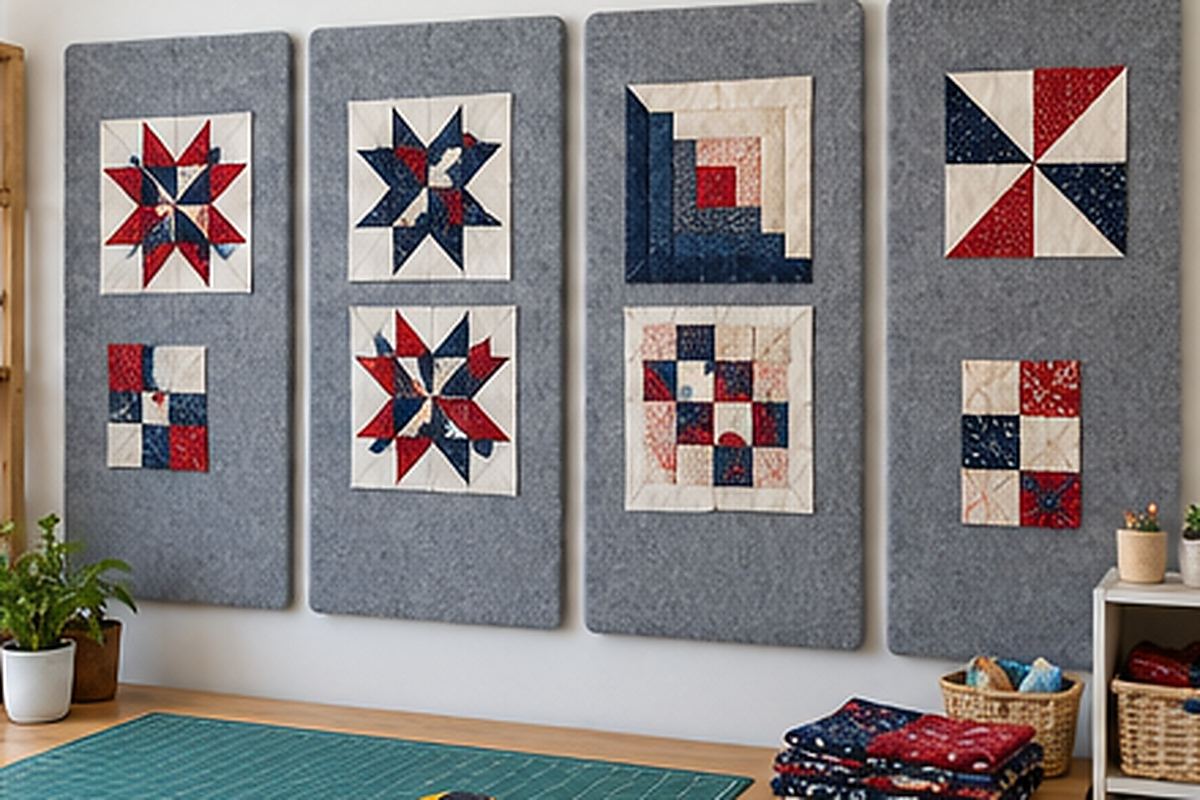
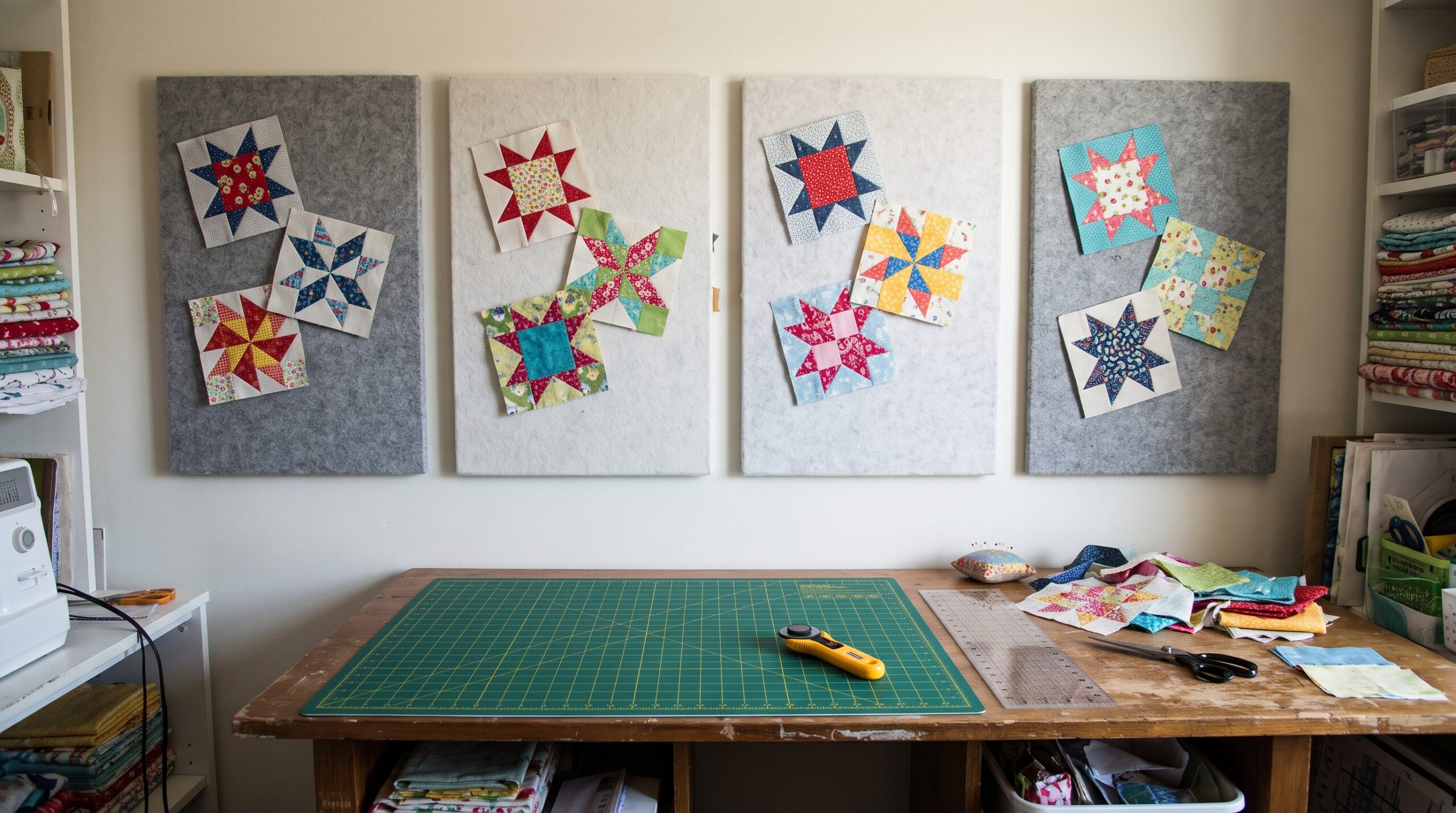
The bigger the quilt, the harder it is to judge the layout on the floor or a bed. A quilt design wall lets you see the blocks upright, the way the finished quilt will hang, so color and value balance are easy to judge.
- Our 60″ x 72″ quilt design wall holds a complete lap or throw quilt layout.
- The large quilt design wall gives extra width for twin, queen and king layouts. For the largest quilts, lay out half the quilt at a time and photograph each half.
- Quilt design wall tiles suit small rooms and baby quilts.
Grid lines on the wall help you check that rows are straight and that the layout matches the size you planned before you sew.
Frequently asked questions
What are the standard quilt sizes?
Typical finished quilt sizes are baby 36 x 52 inches, lap 50 x 65, throw 60 x 70, twin 70 x 90, full 84 x 90, queen 90 x 100 and king 108 x 100. Sizes vary by pattern, so check the measurements of your bed.
What size is a queen size quilt?
A queen size quilt is usually about 90 x 100 inches, with a common range of 88 x 96 to 96 x 108 inches. It is made for a 60 x 80 inch queen mattress.
What size is a baby quilt?
A baby quilt is usually about 36 x 52 inches to fit a crib mattress. Smaller baby quilts of 30 to 40 inches square are common for strollers, car seats and play mats.
What is the difference between a lap quilt and a throw quilt?
A lap quilt, about 50 x 65 inches, covers one person sitting in a chair. A throw quilt is slightly larger, about 60 x 70 inches, and works on a sofa or at the foot of a bed.
How do I work out what size quilt I need?
Measure the mattress, then add the drop on both sides to the width, and the drop plus any pillow tuck to the length. Add 3 to 5 percent for shrinkage from quilting and washing.
Tags