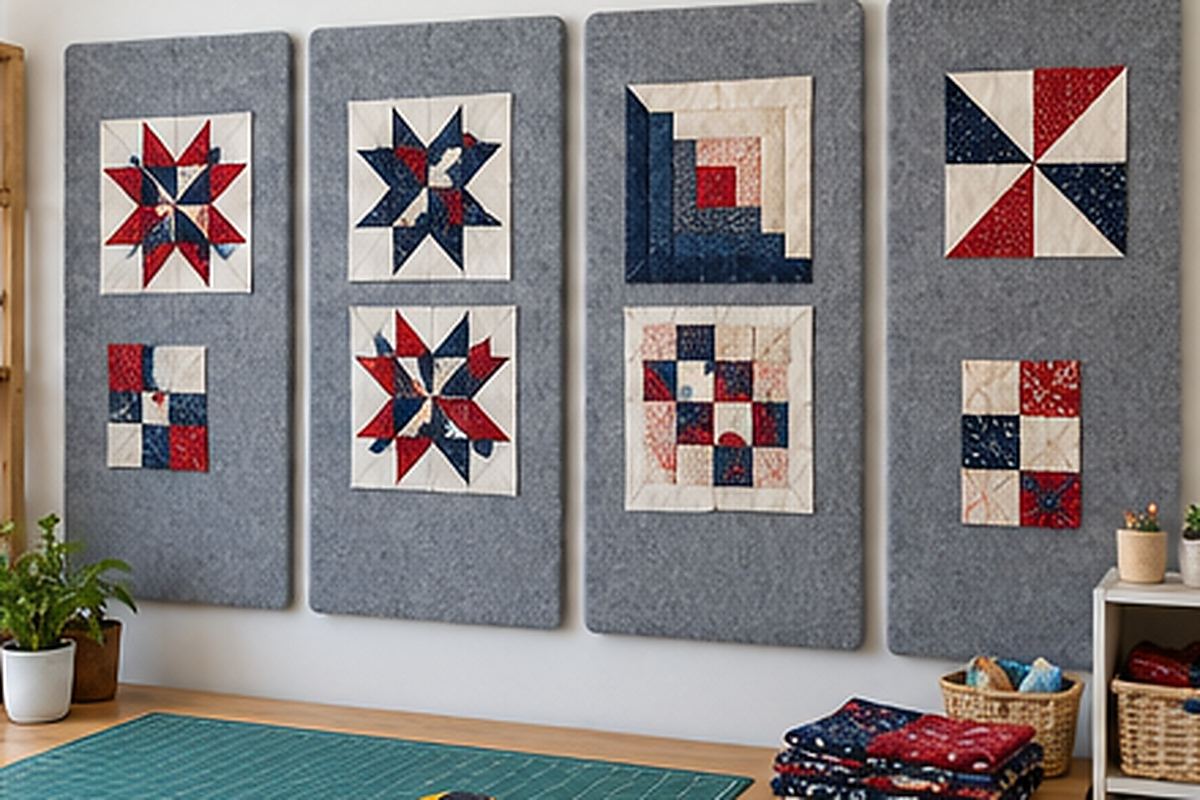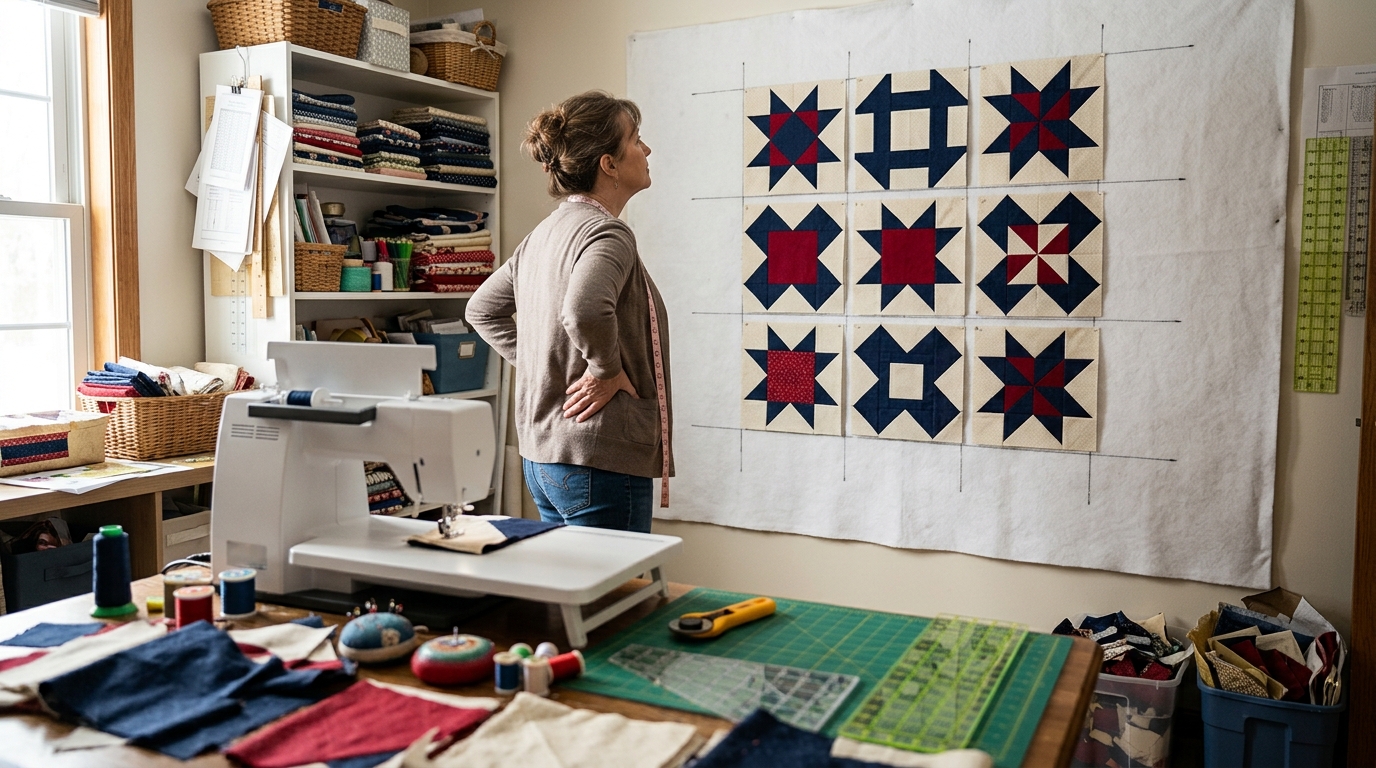
A design wall is the one quilting tool that changes how every other project goes. Instead of laying blocks on the floor and climbing on a chair to see them, you press them onto a vertical surface, step back, and see the whole quilt top at once. If you are choosing the best quilt design wall for your sewing room, the real decision comes down to three surfaces: flannel, felt and tiles. This guide compares them side by side so you can pick the one that fits your space, your projects and the way you work.
What makes a good quilt design wall?
Every design wall does the same basic job: it holds fabric upright without pins so you can audition and rearrange blocks. The good ones do that job well over years of use. Before comparing materials, it helps to know what to judge them on.
- Grip. Cotton blocks should cling on contact and stay put when you walk past. Heavier pieces, such as finished blocks with seam allowances pressed open, should not slide down.
- Size. The wall should be large enough for the biggest quilt top you usually make, or at least a full row of it. A throw needs roughly 50 x 60 inches; a queen top needs far more.
- Grid lines. A printed grid lets you square up rows, check block spacing and keep sashing straight without a ruler.
- Setup and storage. Some walls are permanent. Others roll up, hang from grommets or come apart into boards, which matters if you sew in a shared room.
- Cleaning. Threads and lint build up. A surface you can lint-roll or wash will last longer.
Flannel quilt design walls
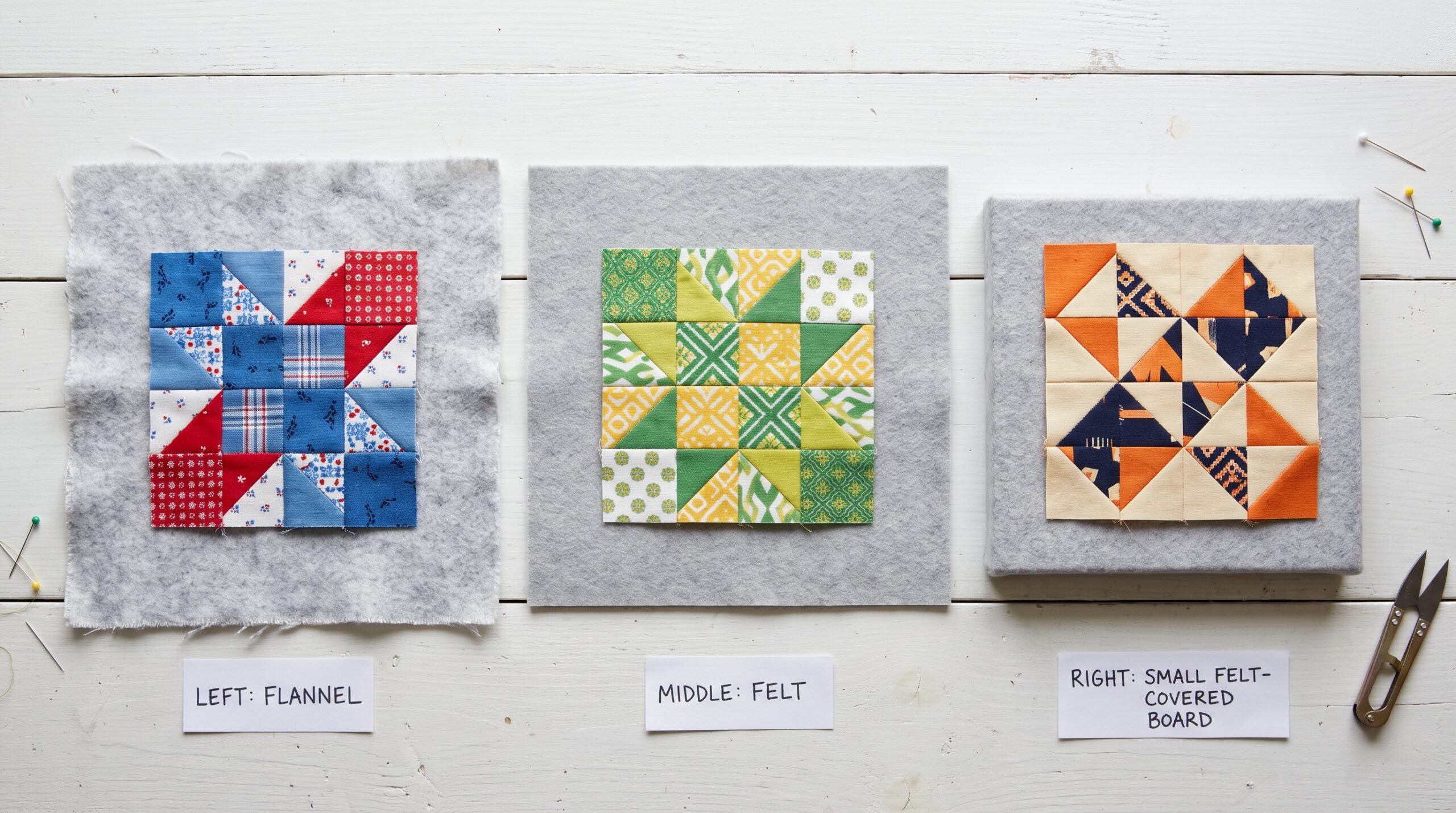
Flannel is the classic design wall surface, and for good reason. The brushed nap grips cotton quilting fabric firmly, so blocks stay where you put them without pins. Flannel walls usually come as a single large sheet that hangs from a rod, hooks or grommets, and they roll up when you need the wall space back.
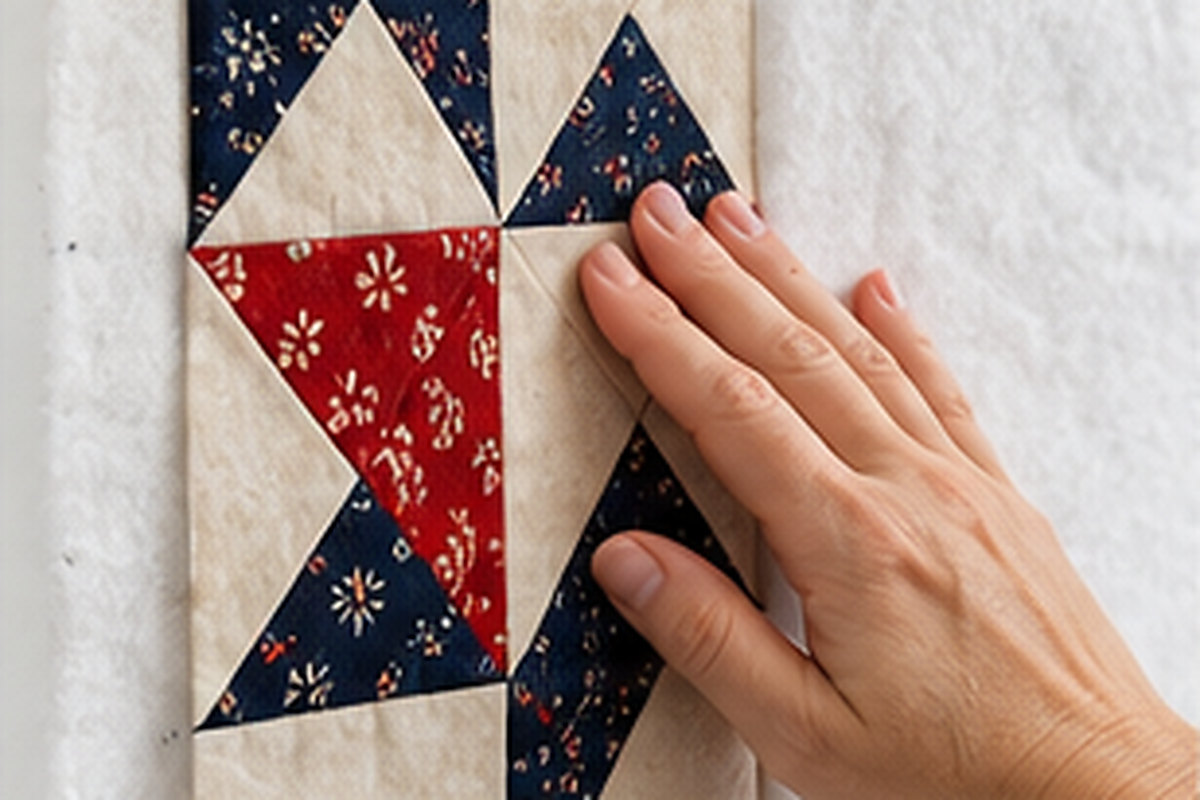
Best for: quilters who want one large, continuous surface for full quilt tops and who like the option of storing it away.
- Pros: strong grip for cotton, large continuous surface, no seams between sections, often printed with grid lines, rolls up for storage, machine washable in most cases.
- Cons: needs a wall or rod to hang from, and very small pieces such as 1-inch squares can be harder to peel off than on felt.
Our QuiltoCraft quilt design wall is a 60″ x 72″ flannel wall with grid lines, sized for throws and lap quilts and large enough to lay out a quarter or half of a bigger quilt.
Felt quilt design walls
Felt is the other popular choice. A felt quilt design wall feels smoother and stiffer than flannel, and small pieces lift off it cleanly. Felt is sold by the yard as quilting felt, pre-cut as a hanging sheet, or bonded to rigid boards.
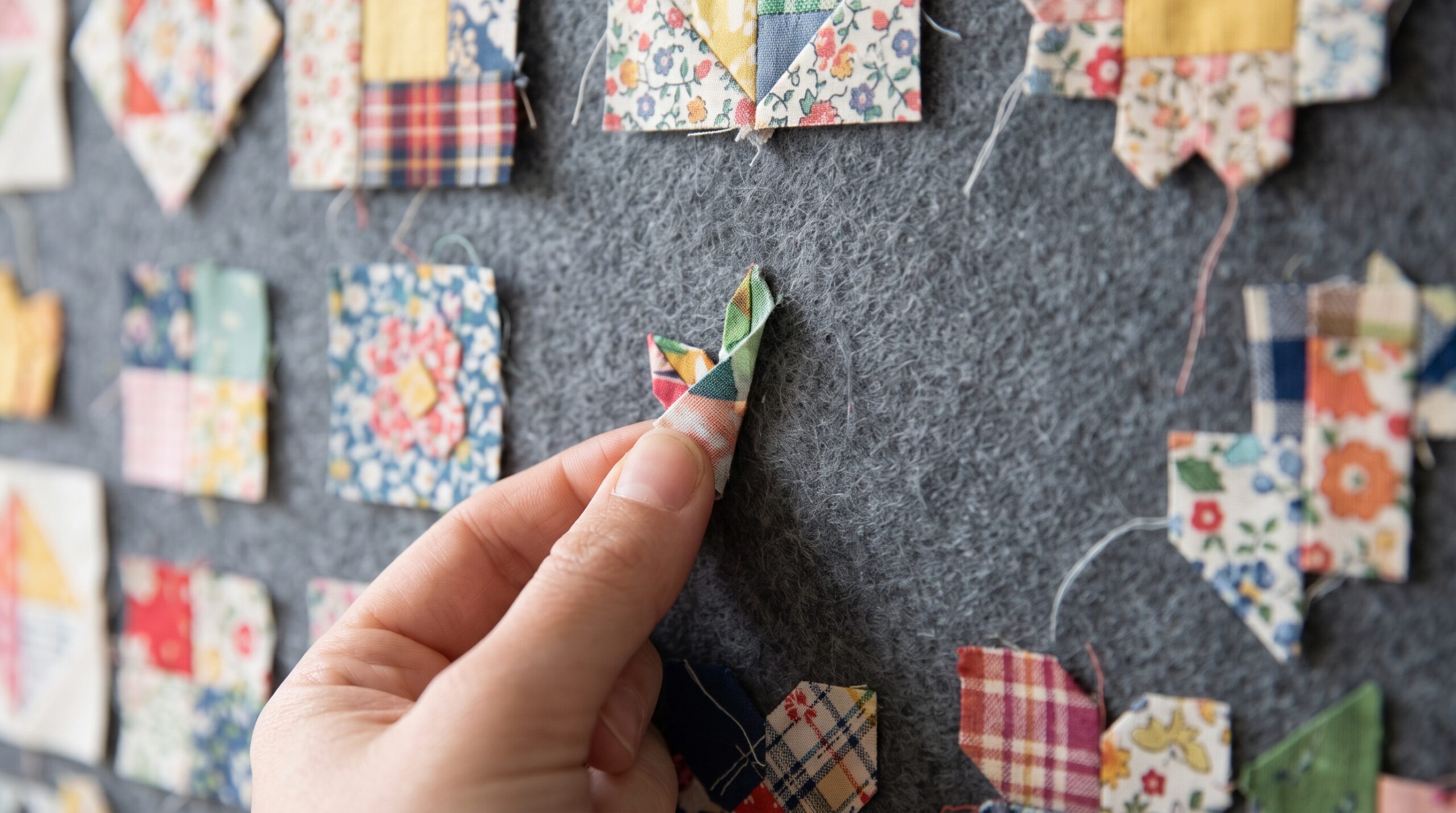
Best for: quilters who work with small pieces, appliqué or English paper piecing and want pieces to come off easily.
- Pros: pieces release easily, smooth surface for precise placement, available in many sizes, holds its shape well when mounted on board.
- Cons: grip is a little lighter than flannel, so heavy finished blocks can sag; cheaper craft felt pills and stretches over time; it is harder to wash.
Quilt design wall tiles and boards
Quilt design wall tiles are rigid boards, usually covered in felt, that you hang side by side or lean against a wall. You can start with a small set and add more, and each board can be moved, stacked or carried to a class or retreat. Felt tiles for a quilt design wall are the best fit when you cannot give up a whole wall permanently.
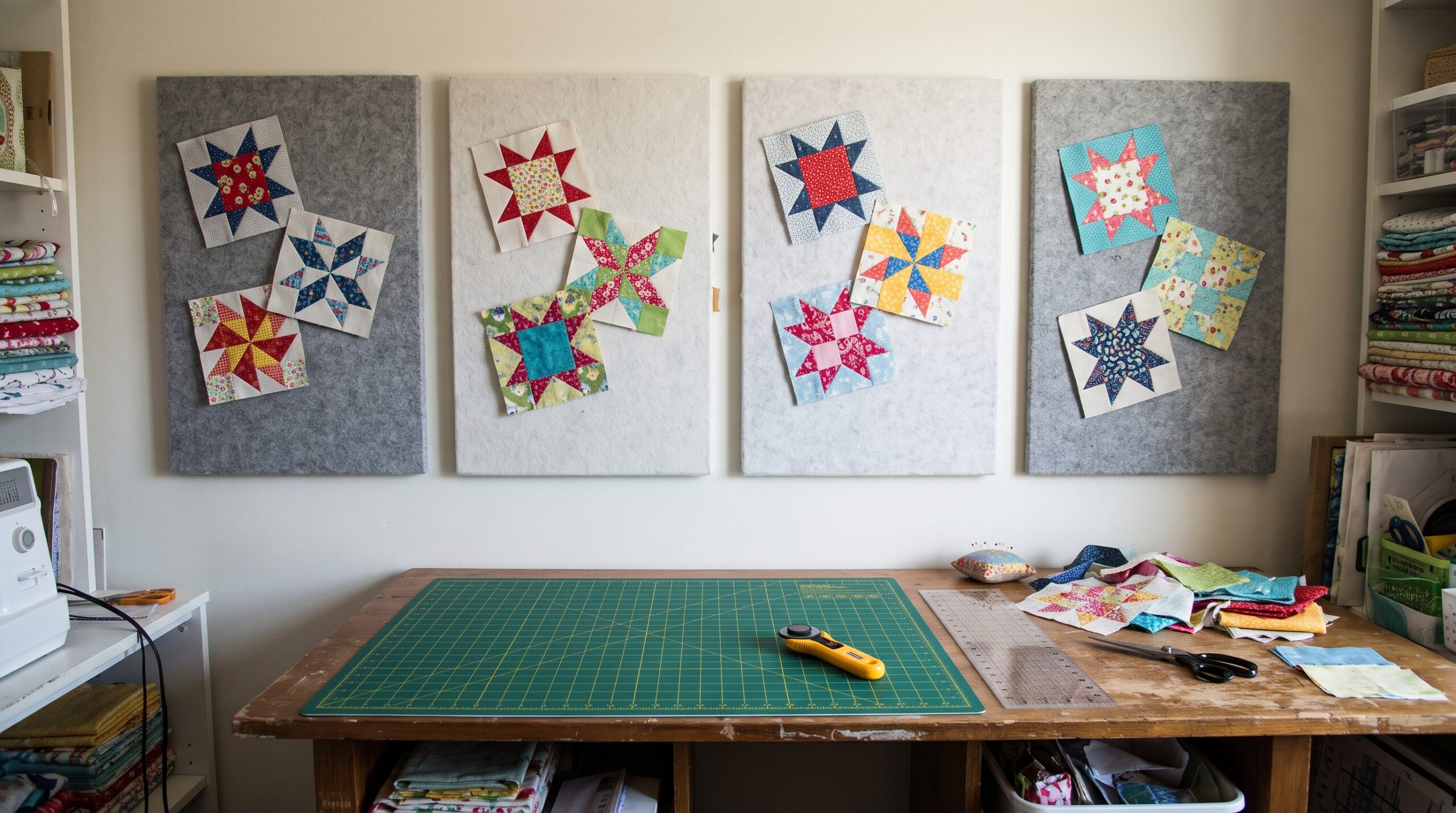
Best for: small sewing rooms, rented homes, classes and retreats, and quilters who work on one block or one section at a time.
- Pros: portable, modular, easy to store flat, rigid surface that never sags, and you can take a single board to the ironing board or cutting table.
- Cons: gaps or seams between boards, so a full quilt top is split across several tiles; a large layout needs many boards.
Our quilt design wall tiles come as a set of 4 large boards (30″ x 24″) or 6 smaller boards (16″ x 12″).
Flannel vs felt vs tiles: side-by-side comparison
| Feature | Flannel wall | Felt wall | Felt tiles / boards |
|---|---|---|---|
| Grip on cotton blocks | Strongest | Good | Good |
| Removing small pieces | Good | Easiest | Easiest |
| Continuous surface | Yes | Yes | No, split into boards |
| Grid lines | Often printed | Sometimes | Rarely |
| Portability | Rolls up | Folds or rolls | Most portable |
| Best for | Full quilt tops | Small pieces, appliqué | Small rooms, classes |
What about batting?
Many quilters start by tacking a piece of cotton or polyester batting to the wall. It works, and it costs very little, but it has limits. Batting stretches and sags over time, it collects lint and threads quickly, it has no grid, and blocks slide down once it loses its loft. It is a good way to find out whether you like working on a design wall. Most people who use one regularly move on to flannel or felt. If you want to try the budget route first, our guide on how to make a quilt design wall walks through the DIY options.
What size design wall do you need?
Match the wall to the quilt sizes you make most often. You do not need to fit an entire king quilt on the wall: many quilters lay out one quarter or one half of a large quilt, check the pattern, then swap in the next section.
| Quilt size | Typical finished size | Design wall that works |
|---|---|---|
| Baby or crib | About 36″ x 52″ | Tiles or any wall |
| Throw or lap | About 50″ x 65″ | 60″ x 72″ wall |
| Twin | About 70″ x 90″ | 106″ x 60″ wall, or a 60″ x 72″ wall in sections |
| Queen or king | 90″ wide and up | Largest wall you can fit, laid out in halves or quarters |
If you need more width, our large quilt design wall comes in 106″ x 60″ and 60″ x 72″, blank or with black grid lines, and hangs from grommets.
Which design wall should you choose?
- You make full-size quilt tops and want to see the whole layout: choose a large flannel wall with grid lines.
- You work with tiny pieces or appliqué: choose felt, as a sheet or on boards.
- Your space is small or shared, or you take projects to classes: choose design wall tiles.
- You are not sure yet: try a DIY batting wall for a few projects, then upgrade once you know how you use it.
Whichever you pick, a design wall makes it much easier to balance colors, spot a block that is turned the wrong way, and test borders and sashing before you sew a single seam.
Frequently asked questions
What is the best quilt design wall for beginners?
A flannel wall with printed grid lines is the easiest place to start. Blocks stick without pins, the grid keeps rows straight, and it rolls up when you are not using it.
Is flannel or felt better for a quilt design wall?
Flannel grips cotton blocks more firmly, so it suits full quilt tops and heavier blocks. Felt releases small pieces more easily, so it suits appliqué and tiny piecing. Both hold fabric without pins.
Do quilt blocks stick to a design wall without pins?
Yes. Cotton quilting fabric clings to flannel and felt on contact. Very heavy blocks or pieces with thick seams may need a pin, but most blocks stay in place on their own.
Are felt tiles good for a quilt design wall?
Felt tiles are a good choice for small rooms, classes and retreats, because they are portable and store flat. The trade-off is that a large quilt top is split across several boards.
How big should a quilt design wall be?
A 60″ x 72″ wall fits most throw and lap quilts. For twin size and larger, choose a wider wall or lay out the quilt in halves or quarters.